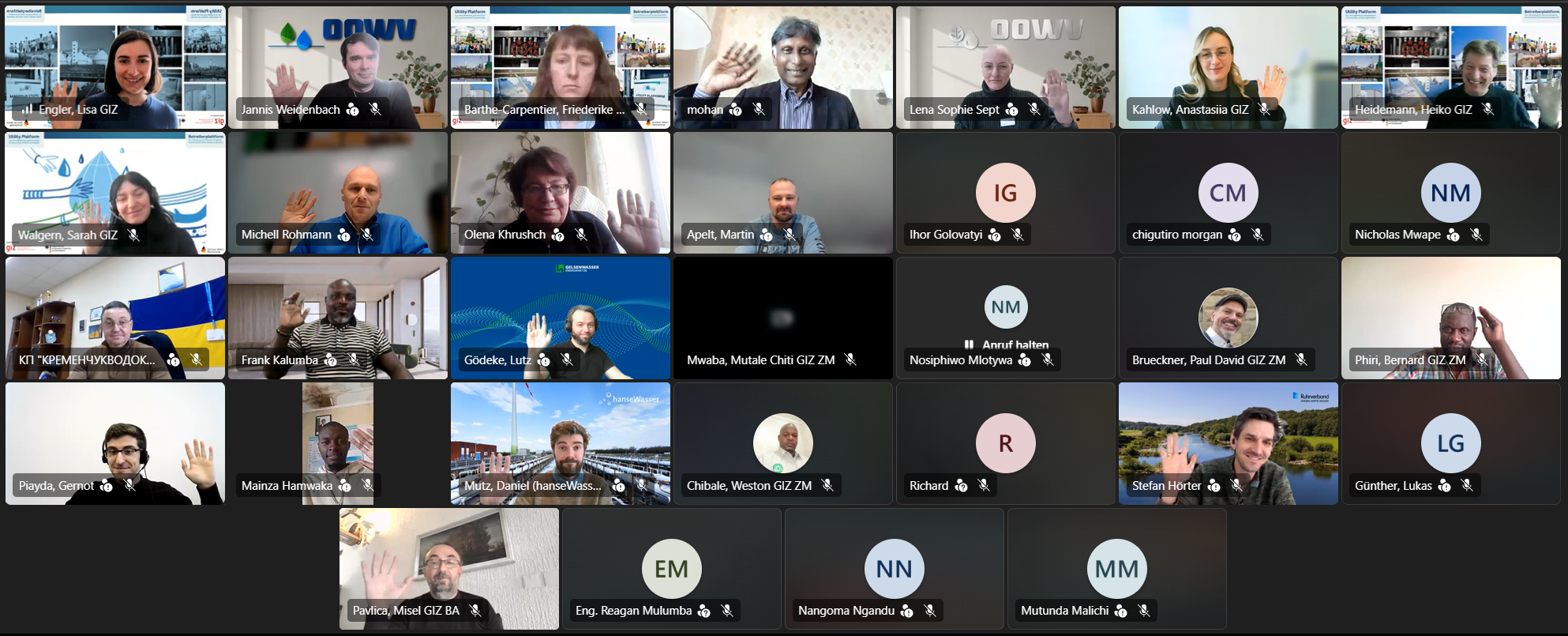
Thank you to the nearly 40 participants who joined our workshop on operational planning and monitoring, and who provided valuable feedback to help us further refine our template.
On 17 March 2026, members of the Utility Platform came together to strengthen how results are planned and tracked within operator partnerships. An input by Mohan Dhamotharan set the scene for a practical exchange, followed by group work using our adapted operational planning template.
A key question emerged during the session: What is operational planning for?
Operational planning provides a structured framework for utilities in an operator partnership to jointly define:
- Activities to be implemented in the upcoming period
- Outputs to be delivered as a direct result of these activities
- Outcomes (including capacity outcomes) that reflect changes in individual, operational and strategic domains
- Intended impact on service delivery and organisational effectiveness
Purpose of Operational Planning in Operator Partnerships:
- Linking activities clearly to outputs and outcomes is not only essential for strategic planning, but also for demonstrating results to donors. Operator partnerships can only show their contribution to improved service delivery if results are consistently documented, communicated, and made visible.
- Through regular operational planning meetings, partners collaborate on an equal footing to agree upon priorities, align expectations and ensure accountability for results.
- Equally important is the systematic reflection on completed activities. Reviewing what has been achieved – and what has not – strengthens mutual learning, reinforces motivation and supports effective, trust-based cooperation.
- Operational plans are submitted to GIZ every six months alongside the reporting template by the German utilities, forming the basis for both monitoring and future planning.
Participants rated both the workshop’s relevance and the selection of content as highly applicable to their work within operator partnerships. The vast majority reported that the session enhanced their understanding of operational planning, particularly through the introduction of the new operational plan template and its accompanying hands-on example. Overall, participants described the workshop as informative, practical, and interactive.
We hope the workshop has sparked motivation among partners to collaboratively develop or further refine their operational plans. Participants are encouraged to reach out to Lisa Engler or their focal point within the Utility Platform should they have any follow-up questions or require additional support.